Wednesday, September 18, 2013

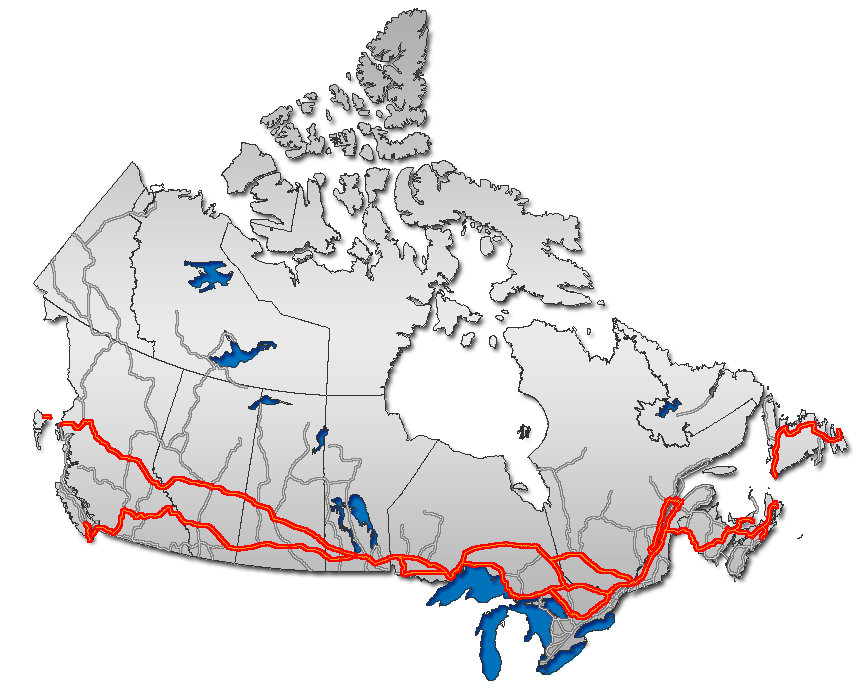
Trans-Canada Highway to
FIX IT 4 KIDS 2 Cross Canada Trek
 | ||
Size of this preview: 746 × 599 pixels. Other resolutions: 299 × 240 pixels | 598 × 480 pixels | 747 × 600 pixels.
Full resolution (860 × 691 pixels, file size: 156 KB, MIME type: image/png)
|


DATSUN 620 PL (Pick-up Light) TRUCKS, 1972-79: WELCOME
DATSUN 620 PL (Pick-up Light) TRUCKS, 1972-79: WELCOME: WELCOME to DATSUN 620PL TRUCKS THE DREAM As a teenager, I had a dream (a very long, long time ago), to attend Expo in Montreal with my...
WELCOME
WELCOME to DATSUN 620PL TRUCKS
I have a spare L20B engine I plan to install in the first truck to need it, probably the 1973 as it feels underpowered (but is cheapest to run. The L20B was a 1,952 cc (85.0 x 86.0 mm) engine produced from
1974 through 1985. It produces 110 hp (82 kW) in 1974-75 form with
112 lb·ft (152 N·m) of torque as installed in the Datsun 610 and 97 hp (72 kW) in 1977-78 form with 102 lb·ft (138 N·m) of torque as installed in the 200SX.[1]
The L20B engine introduced larger-diameter (60 mm) main bearings while
retaining a fully counterweighted crankshaft. The U60 crankshaft also
ushered in the use of a six-bolt flywheel boss. The block introduced a
taller deck height to accommodate the longer stroke and connecting rods.
This specification would also be used later in the Z20 and Z22 engine
series. The bigger powerplant even helped spawn an important new
offering from Datsun's competition department -50mm Solex twin-choke
carburetor kits- complete fuel systems that help produce nearly double
the power from the ubiquitous L20B. The legendary robustness, the nearly
square configuration and the rod-to-stroke ratios possible have made
this engine a popular choice among tuners for turbocharging.
The engine used a carburetor but switched to fuel injection (and round instead of square exhaust ports) in some non-USA markets in 1977. Carburetors were used in all US L20B applications for both cars and trucks. There were six versions of the L20B in the US- U60, U67, U95 (used in cars) and U60, U67, B98, 04W, and 05W (used in trucks). In the US, the L20B was used in six different model families -A10, 610, 710, S10, 620, and 720 models- making it the most versatile powerplant in the company's US history. To avoid confusion with the six-cylinder L20, Nissan called this engine the L20B and redesignated their six-cylinder engine L20A
SD20 The SD20 is a normally aspirated 2.0 L (1,991 cc) straight-four diesel engine with a bore and stroke of 83.0 and 92.0 mm. It had three main bearings. The Diesel versions of the Nissan Cedric in the 1960s until the early 1980s used this engine, which produces 60 PS (44 kW) at 4,000 rpm.[1] It was first seen in June 1964, when it was fitted to the QGS31 Nissan Cedric.
SD22 The SD22 is a normally aspirated 2.2 L (2,164 cc) inline-four diesel engine. It is a stroked version of the smaller SD20 (83.0 x 100.0 mm bore and stroke). It produces 65 PS (48 kW) at 4,000 rpm as fitted to the 1983 430-series Nissan Cedric.[1] It was first used in the 330-series Nissan Cedric from June 1977. It was also produced in a marine version MN 22 by Chrysler Marine under license during the 1980s.
The SD22 was used in the Datsun 720 pickup trucks from 1980 through 1983, where it produced 61 hp (45 kW) (SAE) at 4,000 rpm. Like its lesser SD20 sister (but unlike its SD33 six-cylinder derivative) it has three main bearings and was never available with turbocharging. In 1981, pistons were upgraded to a three ring piston with a steel compression ring carrier cast as part of the piston for improved durability.
The engine is popular in Australia utilized mostly as a reliable pump for remote livestock stations. The engine may still by manufactured and imported by JESCO in California. JESCO also supplies parts. The marine version, using a water-cooled exhaust manifold and expansion tank is also still available from other manufacturers.
Applications:
SD25 The 2.5 L (2,488 cc) SD25 is the biggest version of the four-cylinder SD series, with the larger bore and stroke of 89.0 and 100.0 mm. It was fitted to Nissan 720 pickup trucks 1983 through 1986 and D21 Nissan pickups (only 1987 in Canada). It was also fitted to the Nissan Urvan and Cabstar. Featured five main bearing crankshaft & redesigned rear main seal.
THE DREAM
As a teenager, I had a dream (a very long, long time ago), to attend Expo in Montreal with my friend David Day using a Datsun pick-up with an import camper on back. We were planning to drive from Edmonton Alberta to Montreal, Quebec. Well that journey never happened.
THE REALITY
It's fifty years later, I'm now 66, had 5 kids, five wives, am now physically disabled, retired, with two Datsun 620 Pl pick-ups, a 5th wheel home, a family and not much money on my Canada Pension Plan and Old Age Pension.
My 1973 I've owned since 1990 in Victoria, BC, (paid $110) it has a L16 engine (1595cc, 1.6L) 4 cylinder engine with a 4 speed manual transmission. No power anything. It has had an inspection required on it since 2001. It now needs some final repair work, then inspection, licensing and insurance. The L16 is a 1,595 cc engine produced from 1967 through 1973 for the Datsun 510 and 620PL. It produces 96 hp (72 kW) through 1971 then 92 hp (69 kW). Bore and stroke were 83 mm and 73 mm, respectively.
My 1974 I've owned since 1998 in Crofton, B.C. (paid $1, plus removed scrap), it has an L18 engine with an automatic transmission. No power anything. It needs reassembling, registering, licensing and insurance. The L18 is a 1770 cc engine produced from 1972 through 1976. It produces 105 hp (78 kW) at 5,000 rpm. The L18 replaced the Prince G-18
in 1975. All variants used the same camshaft lobe lift. The L18 was a
popular powerplant in many non-USA markets due to its under-2-liters
displacement, which made it exempt from many fuel and classification
tariffs.
The engine used a carburetor but switched to fuel injection (and round instead of square exhaust ports) in some non-USA markets in 1977. Carburetors were used in all US L20B applications for both cars and trucks. There were six versions of the L20B in the US- U60, U67, U95 (used in cars) and U60, U67, B98, 04W, and 05W (used in trucks). In the US, the L20B was used in six different model families -A10, 610, 710, S10, 620, and 720 models- making it the most versatile powerplant in the company's US history. To avoid confusion with the six-cylinder L20, Nissan called this engine the L20B and redesignated their six-cylinder engine L20A
The four speed standard transmission would be nice to replace it with a 5 speed transmission and the automatic transmission will stay. The standard transmissions were the F4W63 four-speed (1972 and 1973) and
F4W71 four-speed (1974 to 1979). In 1977, the optional FS5W71B
five-speed manual transmission became available. The 3N71 three-speed automatic became available as an option in mid-1972. This was the first series to offer an automatic transmission as an option (all model series before the 620 only had manual transmissions).
One other pie in the sky might be to put a diesel engine in one of them so I can use it with bio-diesel.
SD22 The SD22 is a normally aspirated 2.2 L (2,164 cc) inline-four diesel engine. It is a stroked version of the smaller SD20 (83.0 x 100.0 mm bore and stroke). It produces 65 PS (48 kW) at 4,000 rpm as fitted to the 1983 430-series Nissan Cedric.[1] It was first used in the 330-series Nissan Cedric from June 1977. It was also produced in a marine version MN 22 by Chrysler Marine under license during the 1980s.
The SD22 was used in the Datsun 720 pickup trucks from 1980 through 1983, where it produced 61 hp (45 kW) (SAE) at 4,000 rpm. Like its lesser SD20 sister (but unlike its SD33 six-cylinder derivative) it has three main bearings and was never available with turbocharging. In 1981, pistons were upgraded to a three ring piston with a steel compression ring carrier cast as part of the piston for improved durability.
The engine is popular in Australia utilized mostly as a reliable pump for remote livestock stations. The engine may still by manufactured and imported by JESCO in California. JESCO also supplies parts. The marine version, using a water-cooled exhaust manifold and expansion tank is also still available from other manufacturers.
Applications:
- 1964 Nissan Caball QC141, QC142
- 1964-1970 Nissan Junior Q40/41
- 1970-1982 Nissan Junior 140-series
- 1977-? Nissan Cedric 330-series
SD25 The 2.5 L (2,488 cc) SD25 is the biggest version of the four-cylinder SD series, with the larger bore and stroke of 89.0 and 100.0 mm. It was fitted to Nissan 720 pickup trucks 1983 through 1986 and D21 Nissan pickups (only 1987 in Canada). It was also fitted to the Nissan Urvan and Cabstar. Featured five main bearing crankshaft & redesigned rear main seal.
I have owned a number of Okanagan campers and a camperette, currently there are canopies on both the trucks. I plan to buy an Okanagan Camper.
I enjoy biking, sailing, snorkeling, trailer sailing and canoeing. I've owned aluminum and fiberglass boats in the past as well as an aluminum car topper canoe. So I'll be on the lookout for a trailer sailer suitable for them.
My home is now a modified 1973 Citation 5th wheel and a shed.
MY NEW DREAM is to have my two Datsuns fixed and running with canopies, an Okanagan camper, a trailer - sailer and a roof top aluminum canoe. Then one day soon I plan to travel Trans Canada Highway from the Pacific Ocean in Victoria, British Columbia to the Atlantic Ocean in St. John's, Newfoundland and Labrador. Stops along the way at Major cities:
Victoria, Vancouver, Calgary, Edmonton, Regina, Saskatoon, Winnipeg, Ottawa, Montreal, Quebec City, Charlottetown, Fredericton, Moncton, St. John's
Will you come along with me?
Subscribe to:
Comments (Atom)